The project is funded by AICS (Italian Agency for Development Cooperation).
AID 013244.12.2
Duration: 36 months
Area of intervention: Gicumbi District, Northern Province, Rwanda
Overall Objective
To contribute to improving the living and health conditions of the rural community of Gicumbi District by promoting sustainable water resource management and climate-resilient agriculture.
Specific Objective
To increase food security and the sustainability of agricultural production systems in the Giti Sector by enhancing productive capacity and reducing the risk of soil erosion through irrigation systems and resilient agricultural practices.
Context
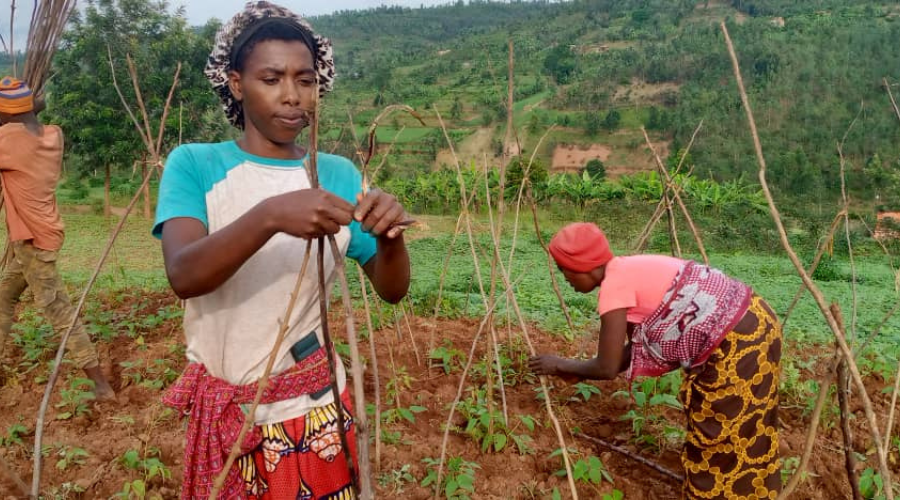
Gicumbi District, in northern Rwanda, is a hilly area highly exposed to drought and erosion. Most families rely on subsistence farming, which is rain-fed and characterized by small, low-fertility plots.
Only a very small portion of Rwanda’s land is irrigated, making it difficult to cultivate during the dry season and contributing to food insecurity, which affects over 20% of the population.
To address these challenges, the SUSTAIN-RW project aims to introduce irrigation infrastructure, sustainable agricultural techniques, and training pathways to strengthen the resilience of local communities.
Main Activities
-
Rehabilitation of a decommissioned hydroelectric dam to create a gravity-fed irrigation system capable of supplying water to fields throughout the year.
-
Construction of hillside terraces and drainage works to reduce erosion risk and improve soil fertility.
-
Technical training on sustainable agriculture, water harvesting, and water-use efficiency for district technicians, farmers, and rural facilitators.
-
Introduction of improved seeds and new agroecological practices to increase crop yields and diversification.
-
Installation of smart weather stations equipped with sensors and artificial intelligence–based data analysis systems to monitor crops and forecast extreme climatic events.
-
Health training for district staff and Community Health Workers aimed at the prevention and early diagnosis of malnutrition and anemia.
-
Establishment of a local irrigation system management committee to ensure long-term sustainability and community participation.
Beneficiaries
Direct: 6,217 people in Muhere Cell, Giti Sector
Indirect: approximately 30,000 residents of Gicumbi District
Expected Results
-
Reduction of severe food insecurity from 26.7% to 20%.
-
100 hectares of land irrigated and cultivated also during the dry season.
-
More resilient, skilled, and environmentally aware farming communities in the sustainable use of natural resources.
Project Partners
-
Imbaraga Farmers Organization – local NGO responsible for on-the-ground agricultural training.
-
Free University of Bozen-Bolzano – technical and scientific support for hydraulic design and agronomic training.
-
Gicumbi District – institutional partner and guarantor of local sustainability.
-
Maggioli SpA – Italian company providing artificial intelligence solutions for agricultural monitoring.
-
Nardon Srl – Italian company with expertise in the design and maintenance of irrigation systems.

Aderiamo a...